Consultation
 Open an account

Armstrong World Industries Trade Idea by Halyk Finance
23 September 2026
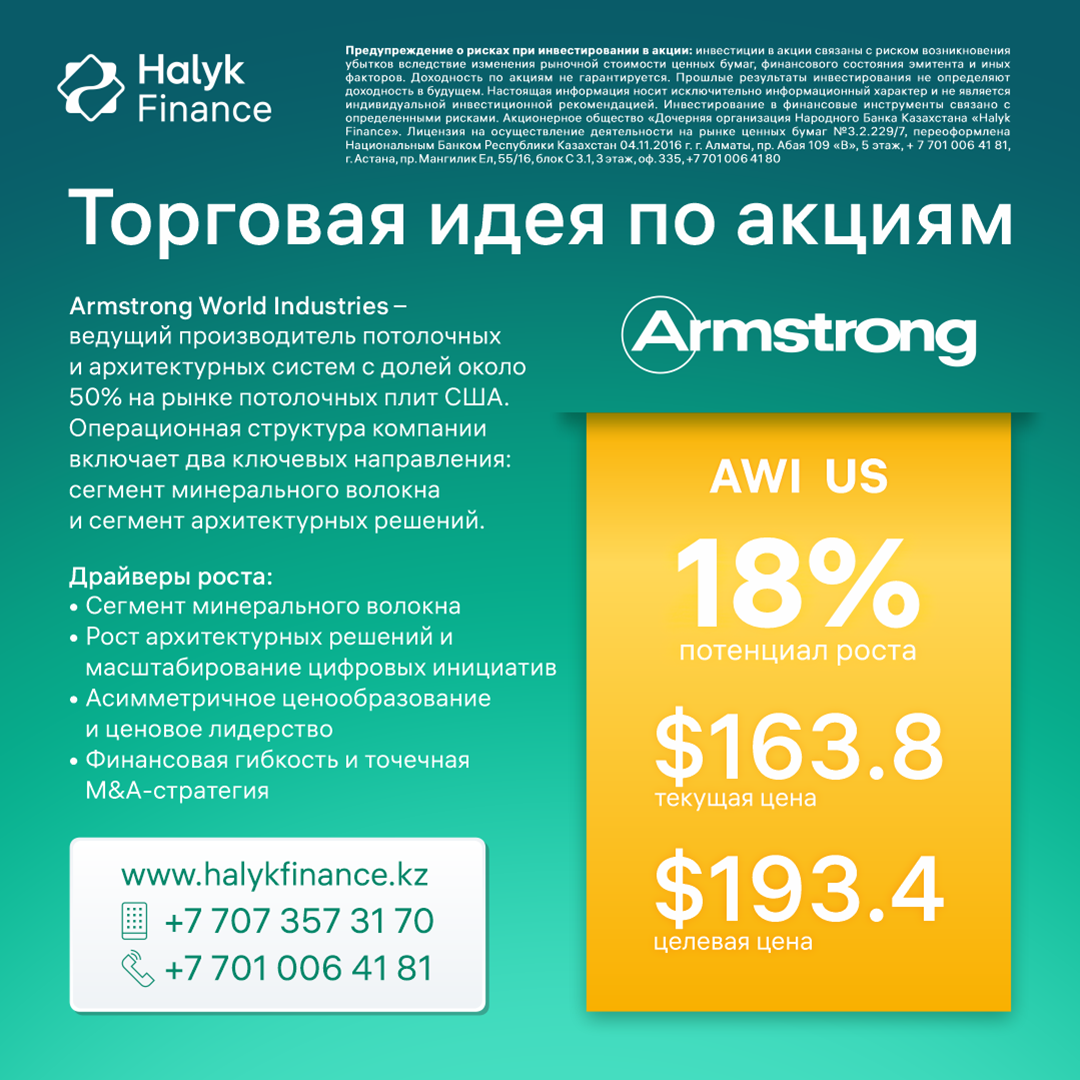
DownloadArmstrong World Industries (AWI) – a leading manufacturer of ceiling and architectural systems with approximately a 50% market share in the US ceiling tile market. The company's operating structure includes two key segments: the mineral fiber segment and the architectural solutions segment. Within the mineral fiber segment, AWI owns a 50% stake in the WAVE joint venture, which produces metal framing. WAVE's revenue is not included in AWI's total revenue, but its net income is immediately reflected in AWI's operating results. The architectural solutions segment specializes in premium metal and wood structures, which are in high demand for AI data center construction.
Growth drivers:
- Mineral fiber segment – this segment generates high EBITDA margins (43–44%), leveraging a 50% US market share. AWI's ability to pass inflation on to customers is driven by the market's oligopolistic structure, with four major players (AWI, USG, CertainTeed, Rockfon). The key source of pricing power is a two-tier exclusive distribution network, which creates high barriers to entry and allows AWI to maintain price discipline without losing market share.
- Growth in architectural solutions and scaling of digital initiatives – the expansion of the architectural division is driven by demand from AI data centers (the number of won projects has grown by more than 50% since the beginning of the year) and «green» construction. The technological catalyst is TEMPLOK panels, which reduce energy consumption by 15–25% and provide clients with tax deductions of up to 40–50% of the project cost. Decarbonization and eco-certification trends are driving the replacement of outdated coatings with AWI's premium eco and acoustic systems (e.g., the Ultima line).
- Asymmetric pricing and price leadership – AWI's dominant position in the key mineral fiber ceiling segment gives it strong pricing power. The company not only passes on cost inflation to customers but also maintains selling prices during periods of deflation in raw materials and gas. The ability to keep prices stable when costs fall protects the business from margin compression during downturns in the inflation cycle and is a key driver for maintaining EBITDA profitability consistently above 30%.
- Financial flexibility and targeted M&A strategy – a $800 million share buyback program is supported by the company's debt load. A net debt to EBITDA ratio in the range of 0.8x to 1.1x provides financial flexibility to simultaneously finance targeted mergers and acquisitions. AWI's operating model converts EBITDA into free cash flow at a rate of around 60%, generating liquidity. Deals in the architectural solutions segment are executed at average multiples of around 9x EBITDA before accounting for synergies and approximately 6x EBITDA after their realization.